
Sucre's Weekly #4
Bite-sized edtech finds for the whole school community. This week, OpenAI’s latest release, a resource on AI impact, setting AI expectations, a podcast on cellphone bans

I wish I had a signature opening like Sean Evans does on my favourite YouTube show, Hot Ones. If you have no idea what I’m talking about and you like watching famous people eat really spicy wings, check it out (nothing to do with education, just a fun thing). So while I figure that signature opening out, I’ll just jump right into it for now. The past few weeks have been busy in the world of AI news! Some are more important than others, but that’s why you have me, to parse it and give you the relevant details.
This week: my take on OpenAI’s latest release, a resource on AI’s impact in the physical world, a model for setting AI expectations in the classroom and a podcast on cellphone bans in schools.
TL;DR (too long; didn’t read)
The resources as they are. No time to read what Sucre has to say about ‘em!
Sora 2 is here | OpenAI (article)
A.I. Video Generators Are Now So Good You Can No Longer Trust Your Eyes
Banning Cellphones: Quick Fix or False Hope? | Harvard Graduate School of Education
Sora 2 is impressive, but concerning...
OpenAI (the leading AI company) released their latest product, Sora 2, a few weeks ago. You’ve probably heard of it already, but it’s essentially a video generating AI that is really good (and a sort of social media feed too). You can read about its official release and see some examples here, or also this NYT article. My take is this: it’s really impressive, but as parents and educators, it’s concerning. I could really extend myself on this topic, so I’ll save that for another post and leave you with some actionable things for now.
Question every piece of media you consume on social platforms (I’m not exaggerating) and stay clear of “Share” or “Forward” buttons.
Engage with your students/children about this and have conversations with them about what they think of it. They’re already seeing a lot of this new content...maybe even making their own! Just remember to be kind, transparent and come from a place of positive intentions. Teenagers didn’t ask for this.
Promote AI literacy in your home, your classroom and your school. Talk to your school leaders and ask them what the unified approach is? Have similar conversations with your families.
I’ll leave you with an eerie quote from OpenAI’s release statement for Sora 2.
“By default, we show you content heavily biased towards people you follow or interact with, and prioritize videos that the model thinks you’re most likely to use as inspiration for your own creations. We are not optimizing for time spent in feed, and we explicitly designed the app to maximize creation, not consumption.” (source)
Yeah, right. We’ve heard that before... Stay skeptical!
Setting AI expectations in the classroom
I started touching on this a little bit in my post On Attribution and AI. Here’s a model from Leon Furze and co for setting AI expectations with your students. The “AI Assessment Scale” is a bit of a step up from the simpler Stoplight Model I also usually share, but if you’re an educator who is starting to allow students to use AI, have a look at this resource to see how it might help you set expectations clearly and effectively.
For humanities teachers...or anyone really!
I came across this resource the other day and the first thing I thought was, TOK teachers would love this! But really, it can be used across so many other subject areas. The way this digital illustration maps out the connections between all the moving pieces behind AI really allows for deep and nuanced conversations with students around AI.
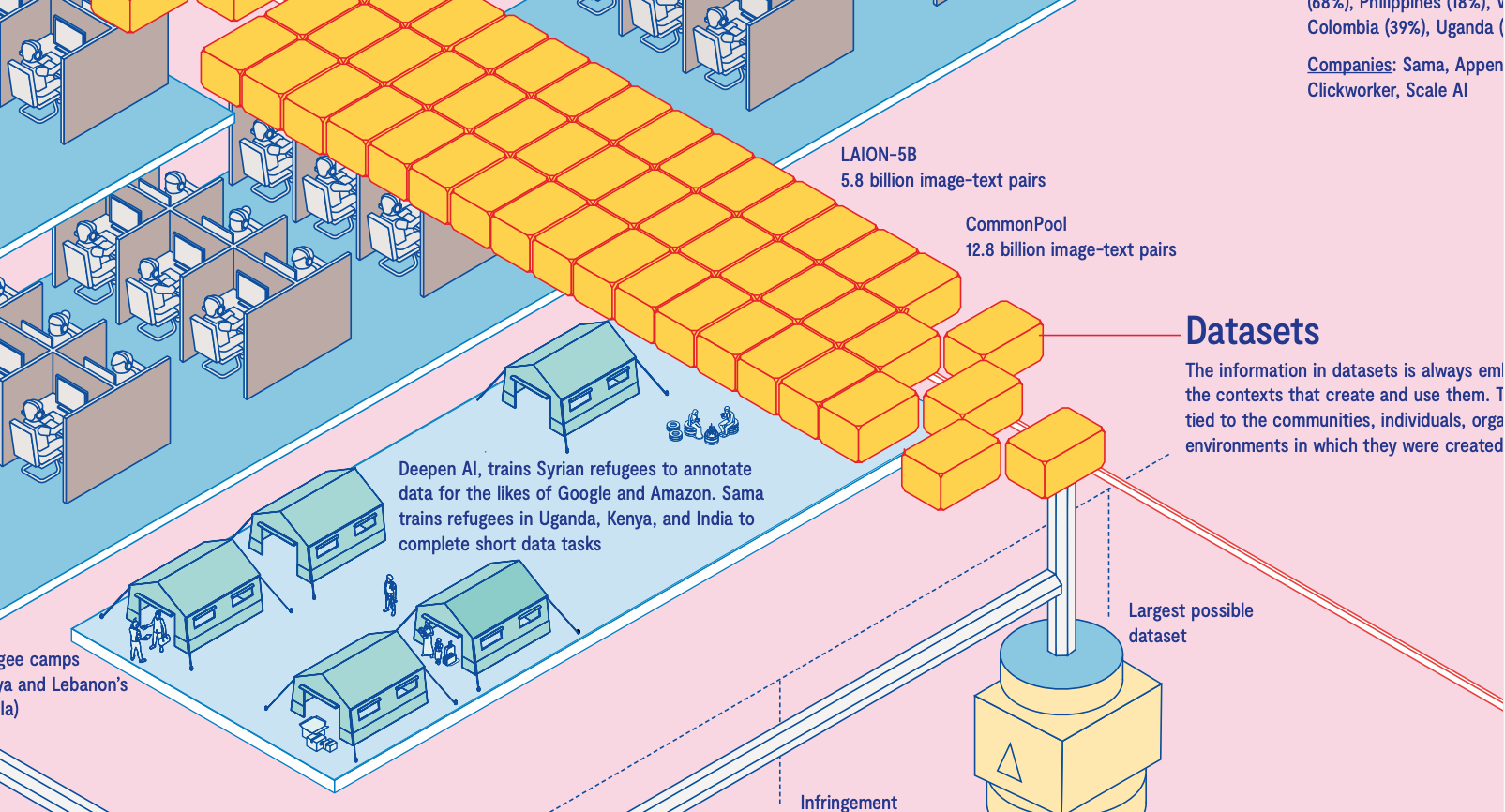
You could use it in a warm up activity, as the basis for a debate session, for research on environmental impacts, and so many more things. If you do end up using it for something, I’d be super curious to hear about it! If you want to take a really meta approach, try uploading the PDF and asking AI what it thinks about it...
Cellphone bans
As someone who leans more towards supporting cellphone bans in schools, this podcast from Harvard’s Project Zero highlights unique perspectives and puts forth some interesting, and research-backed, ideas that I hadn’t yet considered. They ultimately argue that banning phones is not the silver-bullet we all hoped it would be. Can it be helpful in some cases? Maybe, but ultimately it might be causing more harm than good. What’s your school’s policy on phones? Have you read The Anxious Generation - what was your take? For as many good side effects a cellphone ban can have, what negative effects have you seen?
You may have noticed this came to your inbox a little later than usual. I took your feedback and it seems like most people are more likely to read this over the weekend, so there you go! That’s all for this week - enjoy! Until next time 👋
Sucre
Know someone who’d find this useful? Forward the email or share this post!
Forwarded or shared with you? Click the subscribe button so you don’t miss the next one.
Find me across other social media platforms here :)
Couldn't agree more. Sora 2 is truely mind-blowing. I'm super curious, what makes it "concerning" for you? Is it about deepfakes, or something deeper about the tech's impact?